
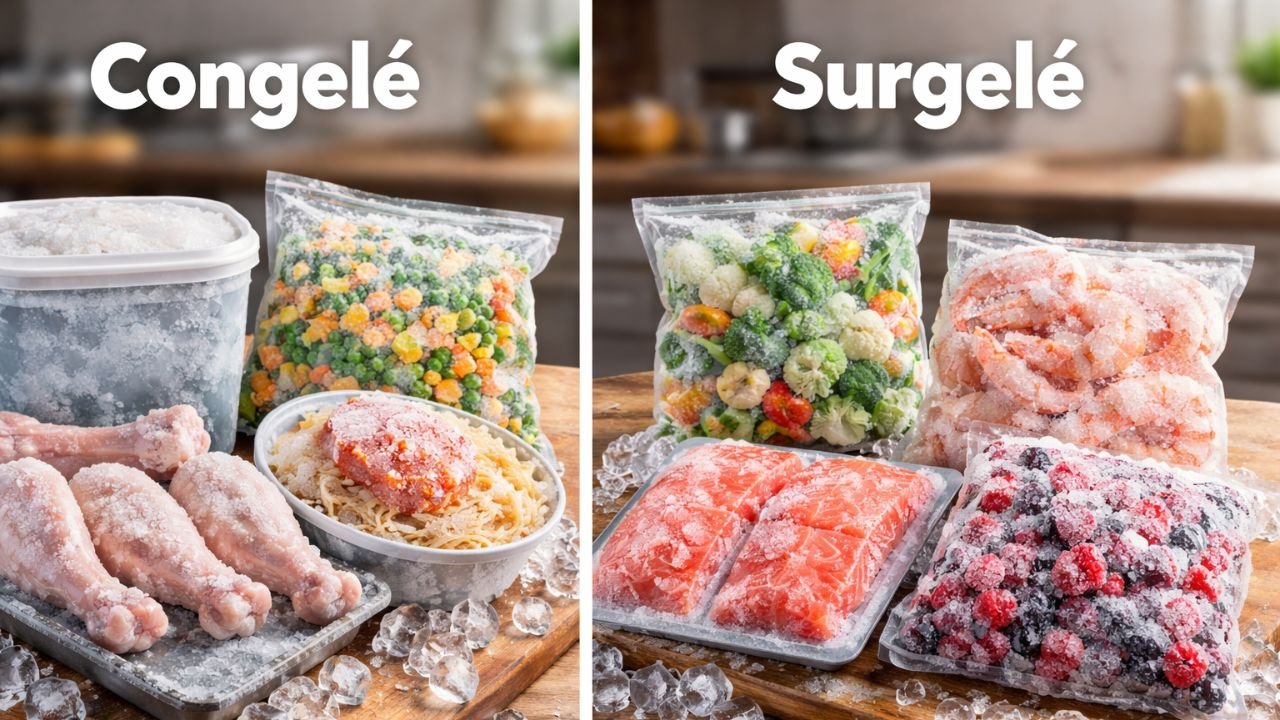
At first glance, the terms “congelé” and “surgelé” seem interchangeable. Both refer to food that has been frozen, and in everyday conversation, they are often used as if they mean the same thing. Yet, behind these similar-sounding words lies a meaningful distinction—one that affects quality, texture, and even nutritional value.
For consumers navigating supermarket aisles or reading product labels, understanding this difference can make a real impact on what ends up on the plate.
What “Congelé” Really Means
The term “congelé” simply refers to food that has been frozen. It’s a broad category that includes any product brought to a low temperature to preserve it for later use.
This freezing process is usually slower and less controlled. It can happen at home in a standard freezer or through basic industrial methods. While it effectively preserves food, the gradual drop in temperature allows ice crystals to form inside the product.
These crystals, though invisible at first, can damage the internal structure of the food. When thawed, this often results in:
- Softer or mushy textures
- Loss of natural juices
- Slight changes in taste
In short, “congelé” food is preserved—but not always perfectly.
The Precision of “Surgelé”
By contrast, “surgelé” refers to food that has undergone a process known as flash freezing. This method freezes food extremely quickly, typically at very low temperatures.
Because the freezing happens so rapidly, ice crystals have little time to form. Instead of large crystals that damage cell walls, tiny crystals develop, preserving the food’s original structure.
The result is a product that, once thawed, retains:
- Its natural texture
- Its original flavor
- Much of its nutritional value
“Surgelé” is not just frozen—it is carefully preserved through advanced techniques.
Why the Difference Matters
At a glance, both types of frozen food may look identical. However, the difference becomes noticeable during cooking and eating.
Vegetables that are simply “congelé” may release excess water and become limp when cooked. On the other hand, “surgelé” vegetables often remain firm and vibrant, closely resembling their fresh counterparts.
This distinction is particularly important for foods where texture plays a key role—such as fruits, seafood, and delicate vegetables.
A Question of Freshness
One of the most interesting aspects of “surgelé” food is how it is prepared. Many products are frozen shortly after harvest or production, sometimes within hours.
This rapid process locks in freshness at its peak. In some cases, “surgelé” items can be nutritionally comparable—or even superior—to fresh produce that has spent days in transport or storage.
“Congelé” food, especially when frozen later or under less controlled conditions, may not offer the same level of freshness preservation.
The Role of Technology
The rise of “surgelé” food reflects advancements in food technology. Modern freezing equipment allows producers to control temperature with precision, ensuring consistent results.
This technological edge is what sets “surgelé” apart. It transforms freezing from a basic preservation method into a refined process that maintains quality at a much higher level.
For consumers, this means access to products that combine convenience with reliability.
Cost and Accessibility
Despite its advantages, “surgelé” food is often slightly more expensive than standard frozen products. The equipment, speed, and quality control involved in flash freezing contribute to higher production costs.
However, the price difference is not always significant, and many shoppers consider it worthwhile for the improved quality.
“Congelé” food, meanwhile, remains a more budget-friendly option. It serves its purpose well for everyday use, particularly when texture and presentation are less critical.
Choosing the Right Option
The choice between “congelé” and “surgelé” ultimately depends on your priorities.
If you value:
- Convenience and affordability → “congelé” may be sufficient
- Texture, flavor, and freshness → “surgelé” is often the better choice
For quick meals or ingredients that will be heavily cooked, the difference may be minimal. But for dishes where quality shines through—such as stir-fries, salads, or desserts—the distinction becomes more noticeable.
Common Misconceptions
Many people assume that all frozen food is the same, or that freezing automatically reduces quality. In reality, the method used makes a significant difference.
Another misconception is that “surgelé” means “more processed.” In fact, it often involves fewer changes to the food itself, preserving it in a state closer to its natural form.
Understanding these nuances helps consumers make more informed decisions.
A Modern Way to Preserve Food
Both “congelé” and “surgelé” play important roles in today’s food landscape. They offer solutions for reducing waste, extending shelf life, and providing year-round access to seasonal ingredients.
However, as expectations around quality continue to rise, “surgelé” is increasingly seen as the gold standard in frozen food.
It represents a balance between convenience and excellence—allowing people to enjoy foods that taste fresh, even after weeks or months in storage.
The difference between “congelé” and “surgelé” is not just technical—it’s practical. One is a general method of preservation, while the other is a refined process designed to maintain quality at its highest level.
By understanding this distinction, shoppers can make choices that better align with their needs, whether they prioritize cost, convenience, or culinary experience.
In the end, both options have their place. But when it comes to preserving the essence of fresh food, “surgelé” stands a step ahead.