
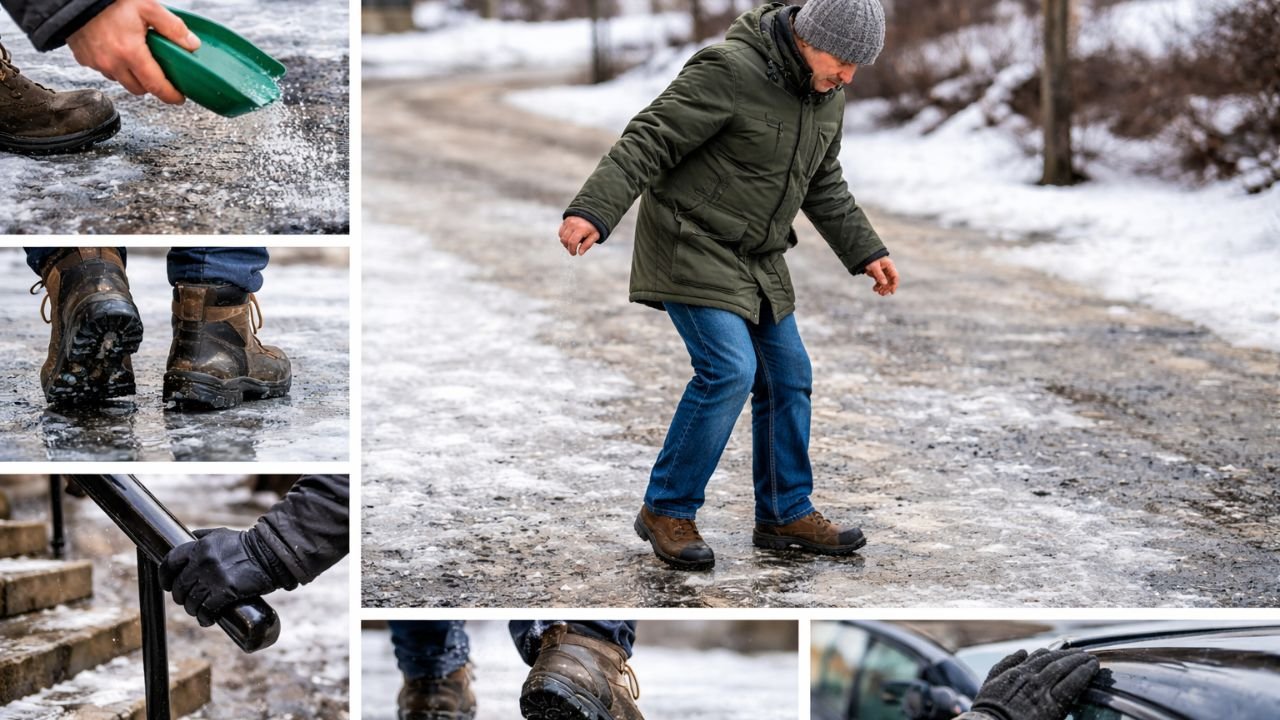
When temperatures drop and winter tightens its grip, icy sidewalks and hidden patches of black ice can quickly turn an ordinary walk into a dangerous situation. Every year, thousands of people suffer slips, sprains, and fractures simply because they underestimate how treacherous frozen surfaces can be.
The good news is that most of these accidents are preventable. With a few simple precautions and a bit of awareness, you can move confidently even when conditions are at their worst. Here are nine smart and practical ways to stay safe when snow and ice take over.
Understand What Black Ice Really Is
Black ice is one of the most dangerous winter hazards because it is nearly invisible. Unlike snow or frosty surfaces, it forms a thin, transparent layer that blends with the pavement.
It often appears on shaded roads, bridges, and sidewalks early in the morning or late at night. If the surface looks wet but temperatures are freezing, assume it is ice. This simple mindset can prevent many unexpected falls.
Wear the Right Footwear
Your choice of footwear makes a significant difference. Smooth-soled shoes or worn-out sneakers offer little grip on icy ground.
Opt for boots with thick, non-slip rubber soles and deep treads. These provide better traction and stability. In extreme conditions, consider slip-on ice grips or cleats designed specifically for walking on snow and ice.
Take Smaller, Slower Steps
One of the most effective techniques for walking on ice is surprisingly simple: slow down.
Short, deliberate steps help maintain balance and reduce the chance of slipping. Keep your feet slightly wider apart than usual and walk flat-footed instead of stepping heel-first. This “penguin walk” technique may feel awkward, but it greatly improves stability.
Keep Your Hands Free
It might seem harmless to carry bags or keep your hands in your pockets, but both habits can increase your risk of falling.
Keeping your hands free allows you to balance better and react quickly if you start to slip. If you must carry items, use a backpack or distribute weight evenly so you can maintain control of your movement.
Watch Where You Step
Awareness is your best defense. Always scan the ground ahead of you, especially in areas that are more likely to freeze.
Be cautious near building entrances, parking lots, and sidewalks that appear shiny. Avoid stepping on slopes or uneven surfaces where ice can accumulate more easily.
Use Handrails and Support
Whenever available, use handrails, fences, or walls for support. This is particularly important on stairs or inclined pathways.
Holding onto something stable provides an extra layer of security and can prevent a minor slip from turning into a serious fall.
Avoid Distractions While Walking
Looking at your phone or being distracted while walking on icy ground can be risky.
Stay focused on your path and surroundings. Even a brief moment of inattention can lead to a sudden slip. If you need to check your phone, stop walking first and stand on a stable surface.
Prepare Your Home Entrance
Many accidents happen just outside the home. Snow and ice often build up on driveways, steps, and walkways.
Clear these areas regularly and use salt, sand, or ice melt to improve traction. Installing outdoor mats and ensuring proper lighting can also make a big difference in reducing slip risks.
Know How to Fall Safely
Even with precautions, slips can still happen. Knowing how to fall can reduce the risk of serious injury.
If you feel yourself losing balance, try to relax your body and avoid stiffening up. Aim to fall sideways rather than backward to reduce the chance of head injuries. Protect your head and avoid using your hands to break the fall, as this can lead to wrist fractures.
Stay Alert in Changing Conditions
Weather conditions can change rapidly during winter. What was safe an hour ago may now be dangerous.
Pay attention to temperature drops, melting snow, and refreezing conditions. Early mornings and evenings are particularly risky times for black ice formation. Staying informed helps you plan your movements more carefully.
Winter conditions don’t have to mean constant risk. By staying aware, choosing the right footwear, and adjusting how you walk, you can significantly reduce your chances of falling on snow and black ice.
Small changes in behavior—like slowing down, keeping your hands free, and watching your step—can make a big difference. With these nine smart strategies, you can navigate icy conditions with greater confidence and safety.