
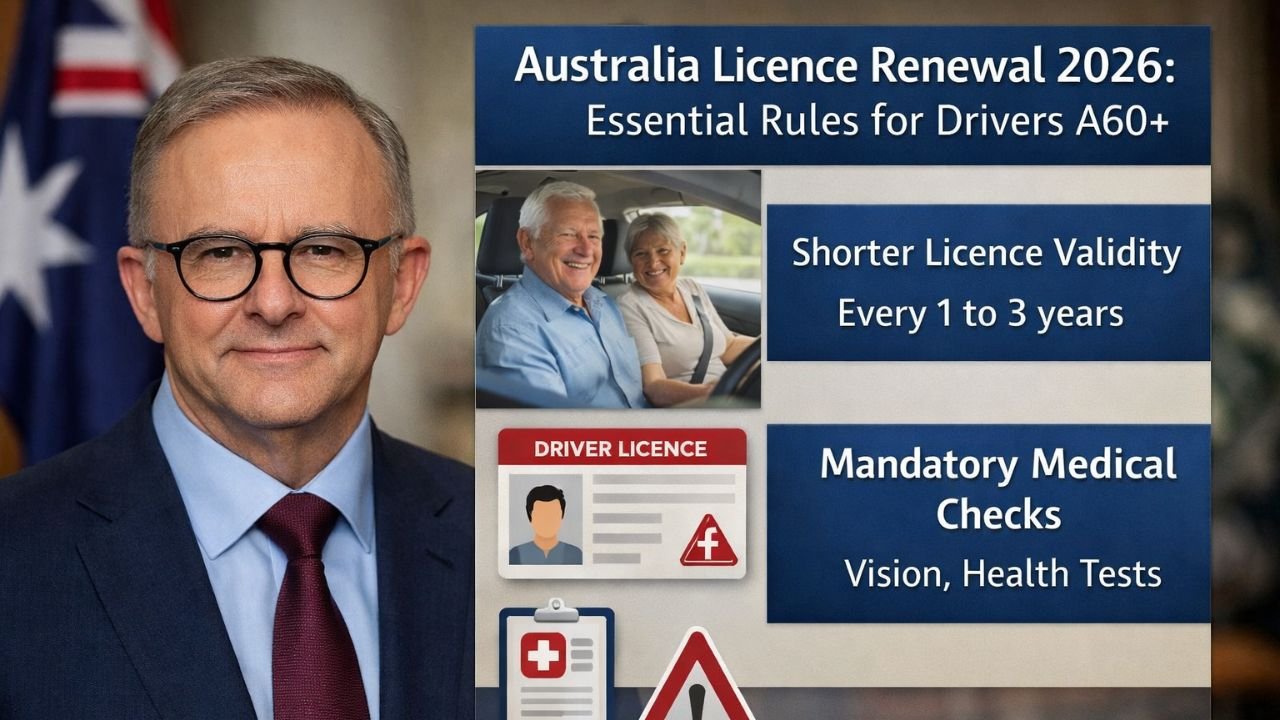
Australia’s driver licence renewal system continues to evolve in 2026, particularly for older motorists. Drivers aged 60 and above are subject to additional checks and renewal conditions designed to balance road safety with independence.
While these rules vary slightly across states and territories, the overall approach focuses on regular assessments, shorter renewal periods, and medical fitness to drive. Understanding these requirements is essential for older Australians who want to continue driving confidently and legally.
Why Rules Change After Age 60
As drivers age, certain physical and cognitive abilities—such as vision, reaction time, and coordination—may decline. The updated 2026 rules aim to ensure that drivers remain capable of safely operating a vehicle without placing themselves or others at risk.
Rather than restricting driving outright, the system introduces gradual checks and safeguards. These measures help identify potential issues early while allowing most older drivers to remain on the road.
Renewal Frequency Becomes Shorter
One of the most noticeable changes for drivers aged 60+ is the reduction in licence renewal periods.
Instead of long-term renewals, many states now require more frequent renewals, often every three to five years starting at age 60. As drivers move into their 70s and beyond, renewal periods may shorten further to one or two years.
This ensures that driving ability is assessed more regularly and that any health-related concerns are addressed in a timely manner.
Medical Assessments and Fitness Checks
Medical assessments are a key component of licence renewal for older drivers in 2026. Depending on age and location, drivers may be required to submit a medical report from their doctor.
These assessments typically evaluate:
Vision and eye health
Cognitive function and memory
Physical mobility and coordination
Any medical conditions that may affect driving
For drivers aged 75 and older, medical checks are generally mandatory in most states. Some jurisdictions may also require periodic health declarations starting from age 60 or 65.
These evaluations are not meant to disqualify drivers unnecessarily but to ensure that they can continue driving safely.
Vision Tests and Eye Health
Good vision is critical for safe driving, and vision testing plays a central role in licence renewal.
Drivers may be asked to complete an eyesight test either during the renewal process or as part of a medical assessment. If corrective lenses are required, this condition will be noted on the licence.
Regular eye check-ups are strongly recommended, as early detection of issues such as cataracts or glaucoma can help maintain driving eligibility.
Conditional Licences Explained
In some cases, older drivers may be issued a conditional licence instead of a standard one.
A conditional licence allows individuals to continue driving under specific restrictions tailored to their abilities. These conditions may include:
Driving only during daylight hours
Avoiding high-speed roads or highways
Staying within a certain distance from home
Requiring corrective lenses while driving
This approach provides flexibility, enabling drivers to maintain independence while reducing potential risks.
Self-Reporting and Legal Responsibilities
Australian drivers have a legal obligation to report any medical condition that could affect their ability to drive safely.
In 2026, this requirement is being more actively enforced. Failure to disclose relevant health issues can result in penalties, including fines or licence suspension.
Drivers are encouraged to consult their doctor if they are unsure whether a condition needs to be reported. Being proactive helps avoid complications and ensures continued eligibility.
State-Based Differences to Know
Although there are national guidelines, licence renewal rules differ between states and territories.
For example:
Some states begin medical assessments at age 75, while others start earlier
Renewal periods vary depending on location and individual circumstances
Testing requirements may differ, including on-road or practical assessments in certain cases
Drivers should check with their local road authority, such as Service NSW, VicRoads, or Queensland’s Department of Transport, to understand the exact requirements in their area.
Tips for a Smooth Renewal Process
Renewing a licence after 60 can be straightforward with proper preparation.
Schedule medical check-ups in advance to avoid delays
Keep records of any ongoing treatments or conditions
Ensure vision tests are up to date
Respond promptly to renewal notices
Review any driving restrictions carefully
Taking these steps can help ensure that the process is quick and stress-free.
Maintaining Safe Driving Habits
Beyond meeting renewal requirements, older drivers can take practical steps to stay safe on the road.
Regular exercise can improve strength and flexibility, while staying mentally active supports cognitive function. Avoiding driving in challenging conditions, such as heavy traffic or poor weather, can also reduce risk.
Many organisations offer refresher driving courses tailored for older drivers, helping them stay confident and informed about current road rules.
The 2026 licence renewal rules for drivers aged 60+ reflect a balanced approach between safety and independence. With more frequent renewals, medical assessments, and tailored conditions, the system ensures that older Australians can continue driving while maintaining high safety standards.
For most drivers, these changes are not restrictive but supportive. By staying proactive, keeping health information updated, and following local requirements, older motorists can continue to enjoy the freedom and convenience of driving.
Understanding the rules and preparing in advance will make the renewal process smoother and help ensure that driving remains a safe and accessible part of everyday life.