
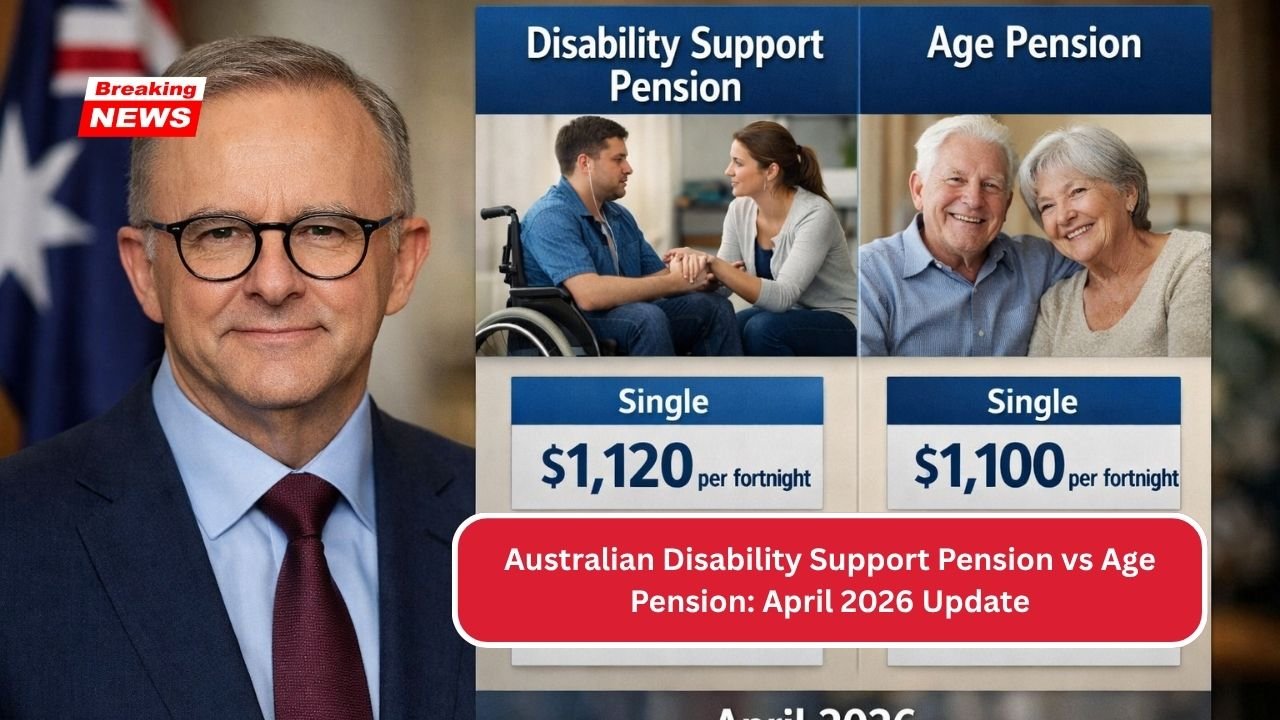
Australia’s welfare system continues to provide essential financial support through two major Centrelink programs in 2026: the Age Pension and the Disability Support Pension (DSP). While both payments offer similar financial assistance, they are designed for very different groups of people and come with distinct eligibility rules, assessments, and obligations.
Understanding how these two pensions differ is crucial for Australians who want to ensure they are accessing the right support and maximising their benefits.
Purpose of Each Pension
The Age Pension is primarily intended for older Australians who have reached retirement age. It provides a steady income stream for individuals aged 67 and over who meet residency and financial requirements. Its purpose is to support retirees in maintaining a basic standard of living after leaving the workforce.
In contrast, the Disability Support Pension is aimed at individuals who are unable to work due to a long-term medical condition. This may include physical, intellectual, or psychological impairments that significantly limit a person’s ability to earn an income.
While both payments serve as financial safety nets, the Age Pension focuses on retirement, whereas the DSP supports those with limited work capacity due to health conditions.
Eligibility Requirements Explained
Eligibility is where the most significant differences between the two pensions become clear.
To qualify for the Age Pension, applicants must meet the minimum age requirement of 67 years and satisfy residency rules. They must also pass income and asset tests, which determine how much they can receive.
The DSP, however, involves a more complex application process. Applicants must provide medical evidence proving that their condition is permanent and prevents them from working at least 15 hours per week. In many cases, a work capacity assessment is also required.
This means that while Age Pension eligibility is relatively straightforward, DSP approval depends heavily on medical documentation and strict assessment criteria.
Payment Rates in April 2026
Following the 2026 indexation update, payment rates for both pensions remain closely aligned.
Single recipients typically receive between $1,100 and $1,200 per fortnight, while couples receive slightly lower amounts per person. These payments include additional components such as the Pension Supplement and Energy Supplement.
Although the base rates are similar, the final amount each recipient receives depends on their personal financial situation, including income, assets, and living arrangements.
Income and Asset Testing
Both pensions are subject to means testing, which ensures that payments are targeted toward those who need them most.
For Age Pension recipients, income and assets directly influence payment levels, but there are no ongoing work requirements. Once approved, payments continue as long as eligibility criteria are met.
DSP recipients are also assessed under income and asset tests, but the rules are stricter when it comes to earnings. If a recipient earns above certain limits, their payments may be reduced or suspended.
This makes financial management particularly important for DSP recipients who attempt to engage in part-time work.
Work and Activity Obligations
A major distinction between the two pensions lies in work expectations.
Age Pension recipients are not required to work or actively seek employment. The system recognises that individuals at retirement age are no longer expected to participate in the workforce.
DSP recipients, however, must demonstrate limited work capacity. In some cases, they may be encouraged or required to participate in suitable work within their capability. Any income earned must be reported and can affect payment levels.
Additionally, DSP recipients may need to provide ongoing medical evidence to confirm their continued eligibility.
Impact of Deeming Rates and Indexation
Both pensions are influenced by annual indexation and deeming rate adjustments. In 2026, deeming rates are set at 1.25% for lower thresholds and 3.25% for higher thresholds.
These rates are used to estimate income from financial assets such as savings and investments, regardless of actual earnings. This deemed income is then included in the income test, affecting the final payment amount.
Indexation ensures that pension payments keep pace with inflation, helping recipients manage rising costs of living such as food, healthcare, and housing.
Choosing the Right Pension
There is no direct choice between the Age Pension and DSP, as eligibility determines which payment applies.
The Age Pension is suitable for individuals who have reached retirement age and meet financial criteria. It offers a simpler structure with fewer ongoing requirements.
The DSP is designed for those whose ability to work is permanently limited due to disability. While it provides similar financial support, it comes with more rigorous eligibility checks and ongoing compliance obligations.
Understanding which pension applies to your situation is key to accessing the correct benefits.
Key Considerations for Applicants
Australians applying for either pension should focus on maintaining accurate and up-to-date records. This includes financial details, residency information, and—especially for DSP applicants—medical documentation.
For Age Pension applicants, ensuring that income and asset information is current helps avoid payment errors.
For DSP applicants, detailed medical evidence and clear documentation of work limitations are essential for approval and continued eligibility.
Staying informed about policy updates and changes can also make a significant difference in maximising entitlements.
The April 2026 update highlights that while the Age Pension and Disability Support Pension offer similar payment levels, they serve very different purposes within Australia’s welfare system.
The Age Pension provides a stable income for retirees, with minimal ongoing requirements. The DSP, on the other hand, supports individuals who are unable to work due to long-term health conditions, requiring stricter assessments and compliance.
By understanding the differences in eligibility, payment structure, and obligations, Australians can make informed decisions and ensure they receive the support they are entitled to.
Keeping personal information accurate and staying aware of policy changes will help both current and future recipients navigate the system more effectively.