
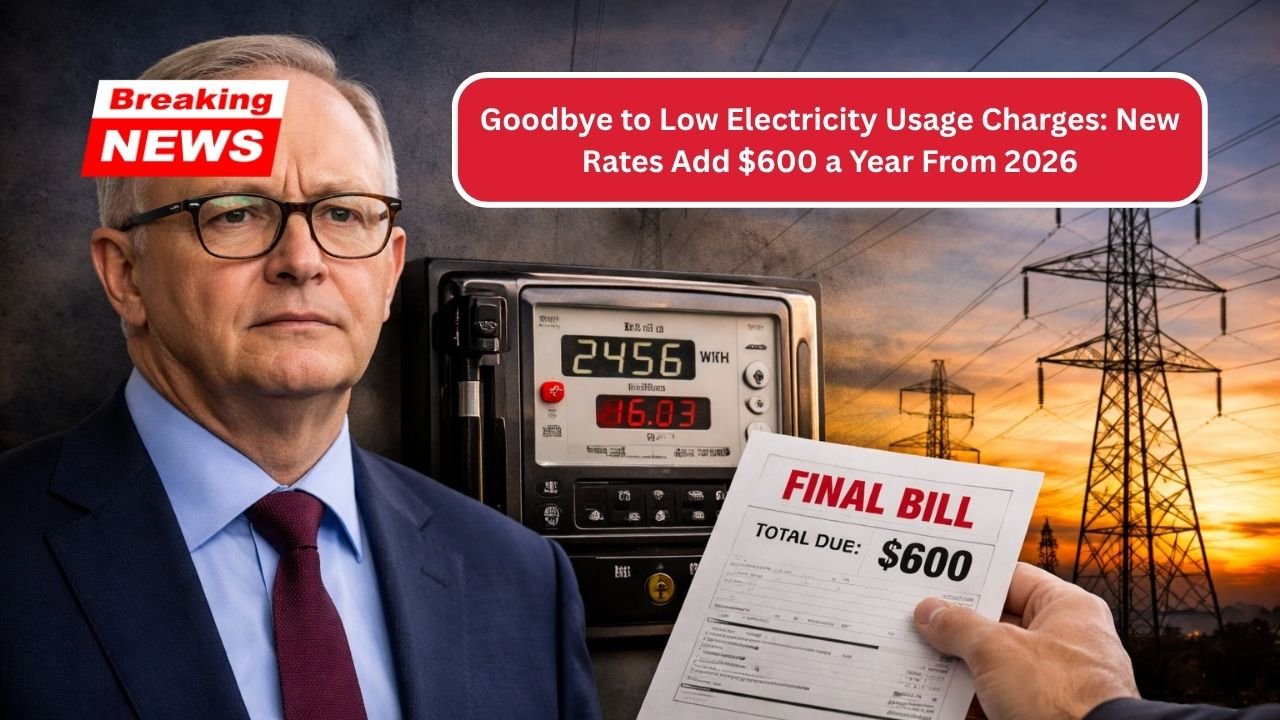
Australians are facing a significant shift in how electricity bills are calculated, with new pricing structures expected to add up to $600 a year for some households starting in 2026. The changes mark a move away from traditional low usage charges toward higher fixed costs, a transition that could impact millions of homes across the country.
While energy providers argue the new model reflects the true cost of maintaining infrastructure, many households—especially low-energy users—may see their bills rise regardless of how much electricity they consume.
What Is Changing in Electricity Pricing
The biggest change lies in how electricity costs are structured. Traditionally, households paid a combination of supply charges (fixed daily fees) and usage charges based on how much electricity they consumed.
Under the new system, a larger portion of the bill will come from fixed charges. In some cases, low usage tariffs are being phased out entirely, meaning households that once benefited from using less power will no longer see the same savings.
This shift is designed to ensure energy providers recover infrastructure and maintenance costs more consistently. However, it also means consumers have less control over reducing their bills through lower usage alone.
Why Bills Could Rise by $600 a Year
The estimated $600 annual increase is based on the cumulative effect of higher daily supply charges and revised tariff structures.
For households that previously kept their electricity use low—such as single occupants, retirees, or energy-conscious families—the new pricing model can be particularly costly. Even if usage remains unchanged, the higher fixed component can push total bills upward.
In contrast, high-usage households may not feel the increase as sharply, since a larger share of their bill was already tied to consumption.
Who Will Be Hit the Hardest
Not all Australians will experience the same level of impact. Low-income households, pensioners, and individuals living alone are among those most likely to feel the pressure.
These groups often rely on minimizing electricity usage to keep costs down. With the new system reducing the effectiveness of that strategy, they may face higher bills without any change in behavior.
Renters may also be affected, particularly if they have limited ability to invest in energy-efficient upgrades such as solar panels or insulation.
The Push Behind the New Model
Energy regulators and providers argue that the updated pricing model reflects the evolving energy landscape. As more households adopt solar panels and reduce grid reliance, utilities are seeking more stable revenue streams.
Fixed charges provide that stability, ensuring the cost of maintaining poles, wires, and grid infrastructure is shared across all users.
There is also a broader push to modernize the energy system, including investment in renewable energy and grid upgrades. These costs are increasingly being passed on to consumers.
Why Using Less Power May Not Save You as Much
One of the most notable consequences of the new pricing structure is the reduced benefit of cutting electricity usage.
In the past, households could significantly lower their bills by using less power—turning off appliances, reducing heating or cooling, and investing in energy-efficient devices.
While these actions still help, the increased fixed charges mean they will have a smaller overall impact on total costs. This change could discourage some consumers from actively reducing their energy consumption.
What You Can Do to Offset the Increase
Despite the changes, there are still ways Australians can manage and potentially reduce their electricity costs.
Reviewing your energy plan is a crucial first step. Different providers may offer varying rates, and switching plans could help mitigate some of the increases.
Investing in energy-efficient appliances can also make a difference over time. While the savings may be less dramatic under the new system, they still contribute to lower overall usage.
For homeowners, installing solar panels remains one of the most effective ways to reduce reliance on grid electricity. Battery storage solutions can further enhance savings, although upfront costs can be significant.
Government Support and Rebates
To help ease the transition, some government support measures may be available. These can include energy rebates, concessions for pensioners, and targeted assistance for low-income households.
However, not all support is automatic. Australians should check their eligibility and apply where necessary to avoid missing out.
Staying informed about new rebate programs and energy assistance schemes will be essential as the pricing changes take effect.
Common Mistakes to Avoid
As electricity pricing evolves, certain mistakes can lead to higher costs.
One common issue is staying on outdated or default energy plans. These are often more expensive than competitive market offers.
Another mistake is assuming that reducing usage alone will keep bills low. While still important, it is no longer the only factor.
Ignoring available rebates or failing to apply for concessions can also result in missed savings.
Finally, delaying upgrades to energy-efficient systems can mean paying more over time, even if the upfront cost seems high.
The Bigger Picture for Australian Households
The shift toward higher fixed electricity charges reflects broader changes in the energy sector. As Australia moves toward renewable energy and modernized infrastructure, cost structures are evolving to support that transition.
For households, this means adapting to a new reality where managing electricity bills requires a combination of strategies rather than relying solely on reduced usage.
Understanding how these changes work will be key to minimizing financial impact and making informed decisions.
Final Thoughts
The end of low electricity usage charges marks a major shift for Australian consumers. With potential increases of up to $600 a year, many households will need to rethink how they manage their energy costs.
While the new pricing model may reduce the effectiveness of cutting usage alone, proactive steps—such as reviewing plans, accessing rebates, and investing in efficiency—can still make a meaningful difference.
As 2026 approaches, staying informed and taking early action will be essential to avoid unnecessary financial strain.